A Hands-On Review of the Kooka Font for Makers and Creators
I was designing a label for a new batch of hand-poured lavender candles when I first tested Kooka. The typical, clean sans-serif I often used for my product listings felt too sterile for the organic, botanical feel I was after. That’s when I remembered Kooka, the hand-drawn font I’d recently downloaded. I typed in the candle’s name, “Midnight Lavender,” and instantly, the entire mood of the design shifted. The label went from merely informational to something that felt crafted, with a warmth that seemed to capture the handmade essence I wanted to convey. It was the perfect spark for a project, and it got me thinking about how this one typeface could transform so much of what we makers create.
The Charismatic Personality of Kooka
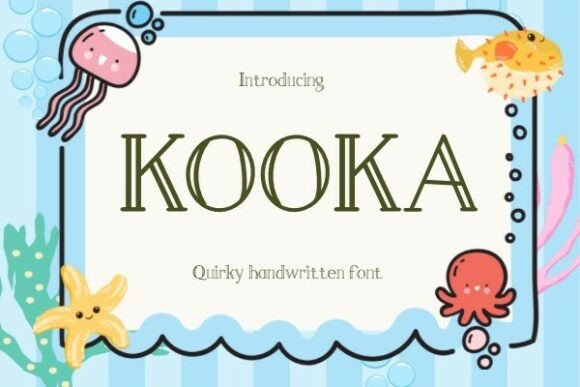
Kooka is, at its heart, a font with a soul. It falls squarely into the Script Amp category, but it’s less about formal calligraphy and more about friendly, confident handwriting. The characters have a delightful bounce and variation that feels authentic, not digitally uniform. Each letter carries a distinct personality—the lowercase ‘a’ and ‘g’ have a wonderful, open charm, while the capitals like ‘K’ and ‘R’ possess a slightly playful swagger. This isn’t a font that whispers; it speaks with a warm, creative voice. For anyone designing greeting cards, wedding invitations, or product labels, that personality is a direct line to emotional appeal. It suggests care, creativity, and a human touch, which is precisely what customers connect with in the handmade marketplace.
Bringing Products to Life: Real-World Applications
Since that candle label, I’ve put Kooka through its paces on a variety of real shop materials. Its versatility for physical and digital products is genuinely impressive.
- Packaging & Labels: Kooka shines as a primary display font for product names. On apothecary jars, tote bags, or boutique tags, it elevates the perceived quality. I’ve used it for “Vanilla Bean” on soap wrappers and “Farmhouse Blend” on coffee bags—it adds that artisanal signature instantly.
- Stationery & Invitations: For wedding welcome boards, birthday invitations, or seasonal greeting cards, Kooka brings a celebratory and personal feel. It works beautifully for names, dates, and short, sweet phrases that you want to stand out.
- Digital Downloads & Wall Art: In printable wall art, planner pages, or digital templates, Kooka acts as a stunning focal point. Phrases like “Gather” in a kitchen print or “Adventure Awaits” on a travel-themed download gain so much character.
- Merchandise & Apparel: Tested on a t-shirt mockup and a mug design, Kooka holds its own. The slightly irregular strokes translate wonderfully to physical goods, avoiding that overly crisp, computer-generated look that can feel cheap.
Readability and Practical Considerations for Production
While Kooka is captivating, a practical review means addressing its best uses—and a few limitations. This is a display font, meaning it’s designed for headlines, titles, and short text blocks, not long paragraphs.
For cutting machines like Cricut or Silhouette, Kooka works well for medium-to-large-scale projects. Its details are clear enough for clean cuts on vinyl for signs or heat-transfer vinyl for shirts, provided your text isn’t excessively tiny. On small stickers or detailed product labels under, say, 20-point size, some of the charming nuances might become lost or turn into a readability challenge. Always print a test sheet! For printed cards and packaging, it’s superb at standard sizes, adding tremendous value to your mockup previews and shop listing images.
A crucial note: due to its decorative nature, avoid using Kooka for dense legal information, washing instructions, or any small-print technical details on your labels. Pair it with a clean, highly readable sans-serif font (like a simple geometric sans) for your body text. This pairing creates a perfect balance: Kooka provides the personality and visual hook, while the supporting font ensures all your essential information is crystal clear.
Licensing and Features for Selling Your Work
Before using any font commercially, a deep dive into the licensing is a must. For Kooka, ensure your license covers the intended use—selling physical products like candles and mugs, creating digital printables for sale, or designing client branding packages. Most quality font licenses for makers will cover these, but always verify.
Also, explore the font files themselves. A robust font often includes:
- Multiple file formats (OTF, TTF, often WOFF for web).
- Stylistic alternates for key letters, allowing you to customize words so they don’t look repetitive.
- Ligatures that beautifully connect certain letter pairs.
- Multilingual support if you sell to a global audience.
Using these features within your design software can make a single phrase feel utterly unique to your brand, enhancing consistency across your candle labels, website graphics, and social media banners.
Where Kooka Fits in Your Creative Toolkit
Kooka isn’t the font for every single line of text in your shop. Instead, think of it as a powerful accent—the special tool you reach for when you want to inject warmth, creativity, and a handcrafted signature into your work. It’s for the moments that need to feel personal: the name of your signature scent on a candle, the celebratory headline on a birthday card, the welcoming quote on a wall art printable, or the brand name on your packaging tape. It builds an emotional bridge between your making process and your customer’s experience.
In a world where clean, minimalist design is everywhere, a font like Kooka offers a beautiful counterpoint. It reminds the viewer that behind the product is a person, a story, and a creative intention. For makers, sellers, and creators, that connection is everything. After testing it across real projects, I can say Kooka has earned a permanent spot in my design toolkit—not as a workhorse font, but as the charming, indispensable accent that makes my creations feel unmistakably mine.